Introduction
From its humble beginnings to its current state-of-the-art techniques, laparoscopic surgery has revolutionized patient care, offering faster recovery times, reduced pain, and improved outcomes. Join us as we delve into the dynamic world of laparoscopic surgery, exploring its evolution, benefits, challenges, and prospects.

Pioneering Progression
It was in 1902 that Georg Kelling from Dresden in Germany performed laparoscopic surgery using dogs and in 1910, Hans Christian Jacobus from Sweden used the approach to operate on a human.
Redefining Patient Care
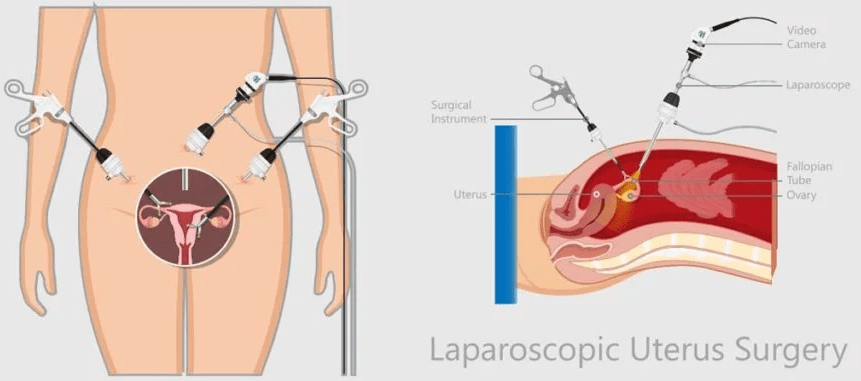
Laparoscopic surgery, also known as minimally invasive surgery, has revolutionized patient care across a spectrum of medical specialties. By replacing traditional open surgery with smaller incisions and specialized instruments, laparoscopic techniques offer numerous advantages that redefine the patient experience and treatment outcomes. Such as
- Reduced Trauma and Scarring
- Faster Recovering Times
- Shorter hospital stays.
- Lower risk of complications
- Improved cosmetic results.
- Enhances quality of life
Explore the diverse array of laparoscopic procedures performed across various medical specialties, including gastroenterology, gynaecology, urology, and bariatric surgery. From gallbladder removal to hernia repair, learn how minimally invasive techniques are enhancing patient outcomes. Mahsheer Surgical Instruments: Pioneering Precision in Minimally Invasive Surgery.
Tackling Technical and Clinical Complexities in Laparoscopic Surgery
it is challenging for surgeons to visualize anatomical structures and navigate complex surgical environments effectively. To overcome this challenge, surgeons rely on advanced imaging technologies, such as high-definition cameras and three-dimensional visualization systems, which provide enhanced clarity and depth perception.
Laparoscopic instruments are designed to replicate the movements of a surgeon’s hands within the confined space of the body cavity. However, mastering the manipulation of these instruments requires precise hand-eye coordination and dexterity. Surgeons must undergo extensive training and practice to develop the necessary skills for instrument handling, including tasks such as grasping, cutting, and suturing. Simulation-based training programs, virtual reality simulators, and skills laboratories offer valuable opportunities for surgeons to hone their instrument handling skills in a controlled environment before performing procedures on patients.
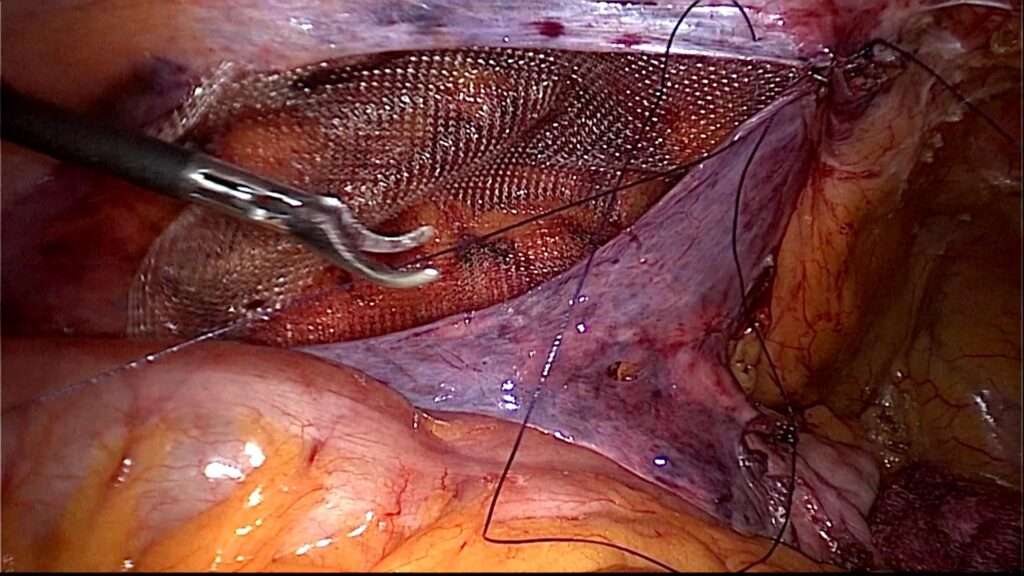
Laparoscopic surgery can be physically demanding for surgeons due to the prolonged periods of standing and the ergonomic challenges associated with working in constrained spaces. Prolonged static postures and repetitive movements can lead to musculoskeletal strain and fatigue, potentially impacting surgical performance and patient outcomes. To mitigate these risks, surgeons must prioritize ergonomics in the operating room, including proper positioning of monitors and equipment, adjustable operating tables, and ergonomic instrument handles. Regular breaks, stretching exercises, and ergonomic training can also help prevent fatigue and improve surgeon well-being. Elevate Your Surgical Experience with Mahsheer Surgical Cutting-Edge Instruments.
Surgeons must be prepared to handle intraoperative and postoperative complications, such as bleeding, organ injury, and infections, with appropriate interventions and escalation of care as needed. This requires comprehensive training in surgical techniques, complication recognition, and crisis management, as well as effective communication and teamwork in the operating room.
Charting the Course Ahead in Laparoscopic Surgery
Augmented Reality (AR) in the Operating Room:
Augmented reality technology holds immense promise for enhancing surgical visualization and navigation in laparoscopic procedures. By overlaying digital information, such as anatomical structures, preoperative imaging data, and real-time surgical guidance, onto the surgeon’s field of view, AR systems can provide enhanced spatial awareness and decision support. Surgeons can benefit from improved precision, efficiency, and safety, ultimately leading to better patient outcomes. Trusted by Surgeons Worldwide, Mahsheer Surgical Instruments Sets the Standard for Excellence.
Robotics and Artificial Intelligence (AI):
The integration of robotics and artificial intelligence into laparoscopic surgery is revolutionizing the way procedures are performed. Robotic-assisted platforms offer greater dexterity, stability, and range of motion than traditional laparoscopic instruments, enabling surgeons to perform complex maneuvers with enhanced precision and control. AI algorithms can analyze vast amounts of surgical data to provide real-time feedback, predict outcomes, and optimize surgical workflows, leading to more personalized and adaptive surgical approaches.
Miniaturization of Instruments:
Advances in miniaturization technology are paving the way for the development of smaller, more flexible laparoscopic instruments. Miniaturized instruments allow surgeons to access confined anatomical spaces with greater ease and perform delicate maneuvers with improved precision. By reducing tissue trauma and optimizing ergonomics, miniaturized instruments have the potential to further enhance the safety and effectiveness of laparoscopic procedures, particularly in complex and minimally accessible surgical sites.
Conclusion
In conclusion, laparoscopic surgery stands as a beacon of innovation in modern medicine, offering patients safer, more effective, and less invasive treatment options. While challenges persist, advancements in technology, training, and patient care are propelling the field forward into a future defined by precision, collaboration, and improved outcomes. As we navigate this exciting frontier, let us remain dedicated to pushing the boundaries of laparoscopic surgery and enhancing the well-being of patients worldwide.
Discover the Difference with Mahsheer Surgicals: Where Quality Meets Innovation in Surgical Instruments.